Following Up on the Hyde Park Avenue Safety Walk
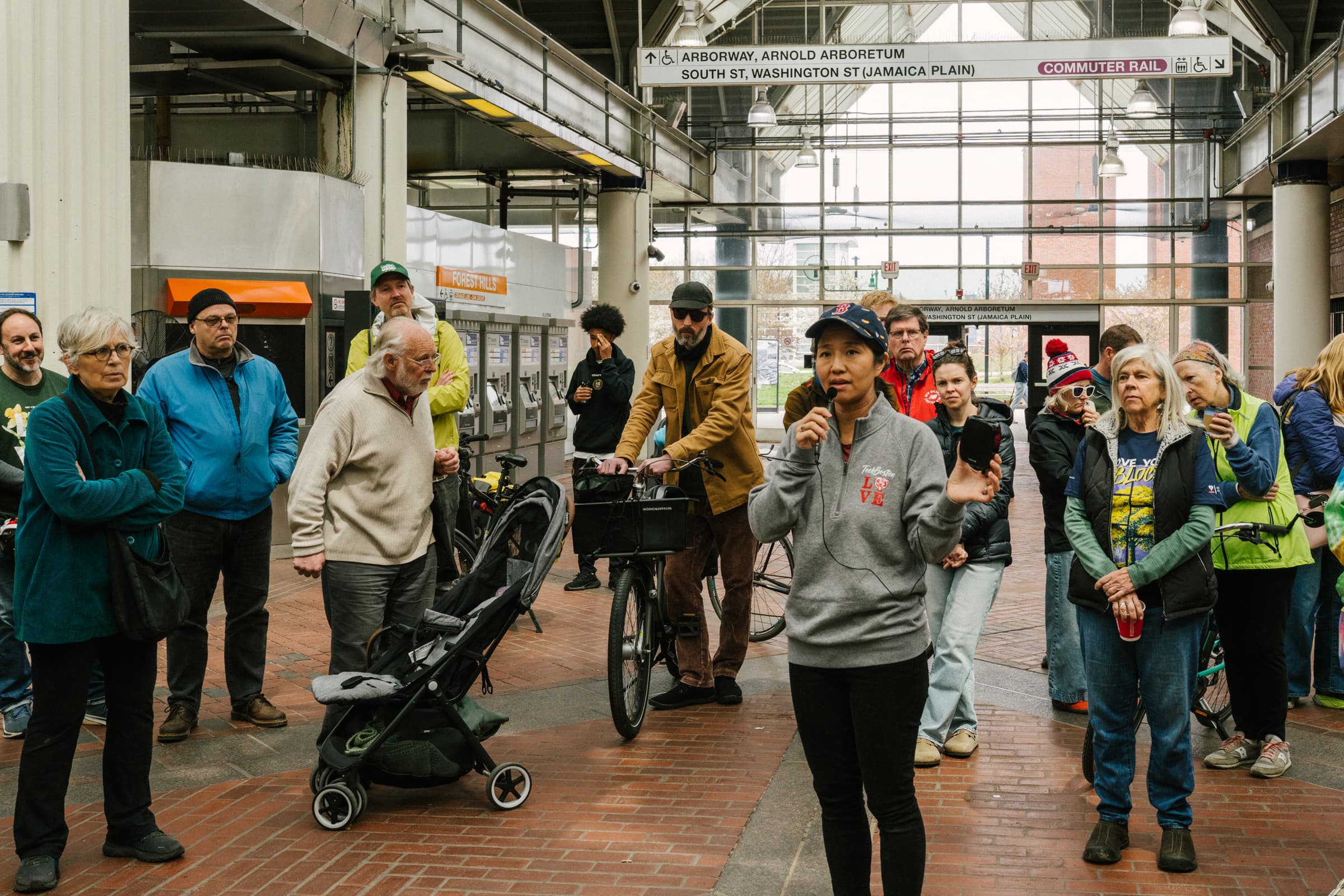
More than 70 residents gathered with city officials, councillors, and Mayor Wu for a constructive conversation about making Hyde Park Avenue safer.
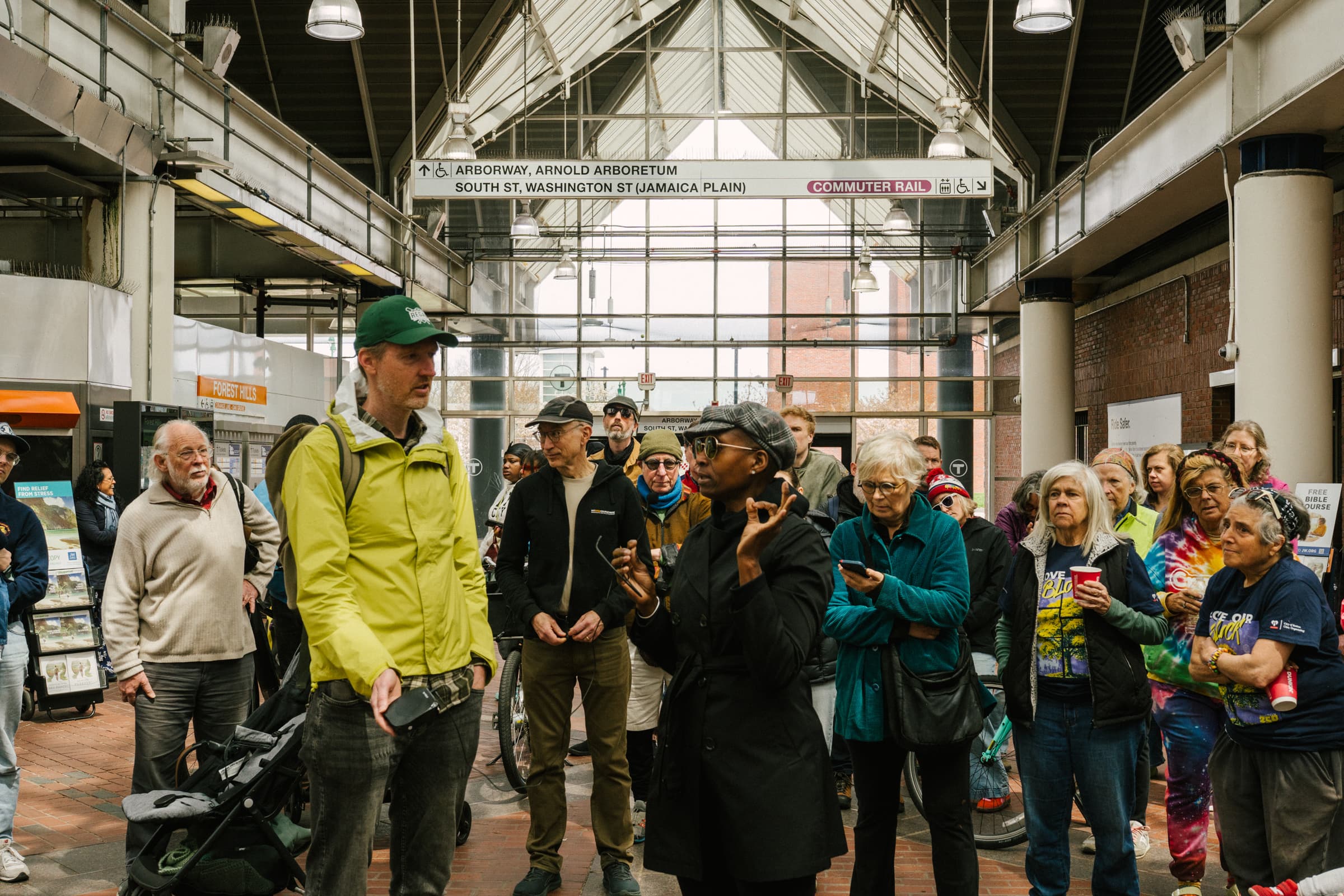
Thank you to everyone who attended the Hyde Park Avenue "safety walk & talk" on Saturday April 25 at Forest Hills station!
We gathered more than 70 residents of all ages, city officials, Councillors Weber and Pepen, and Mayor Wu for a lively yet civil and constructive conversation. Volunteers then reached out to businesses by Forest Hills for outreach and support for a safe HPA (and almost all of them signed support letters). Here is some media coverage and a video of the event.
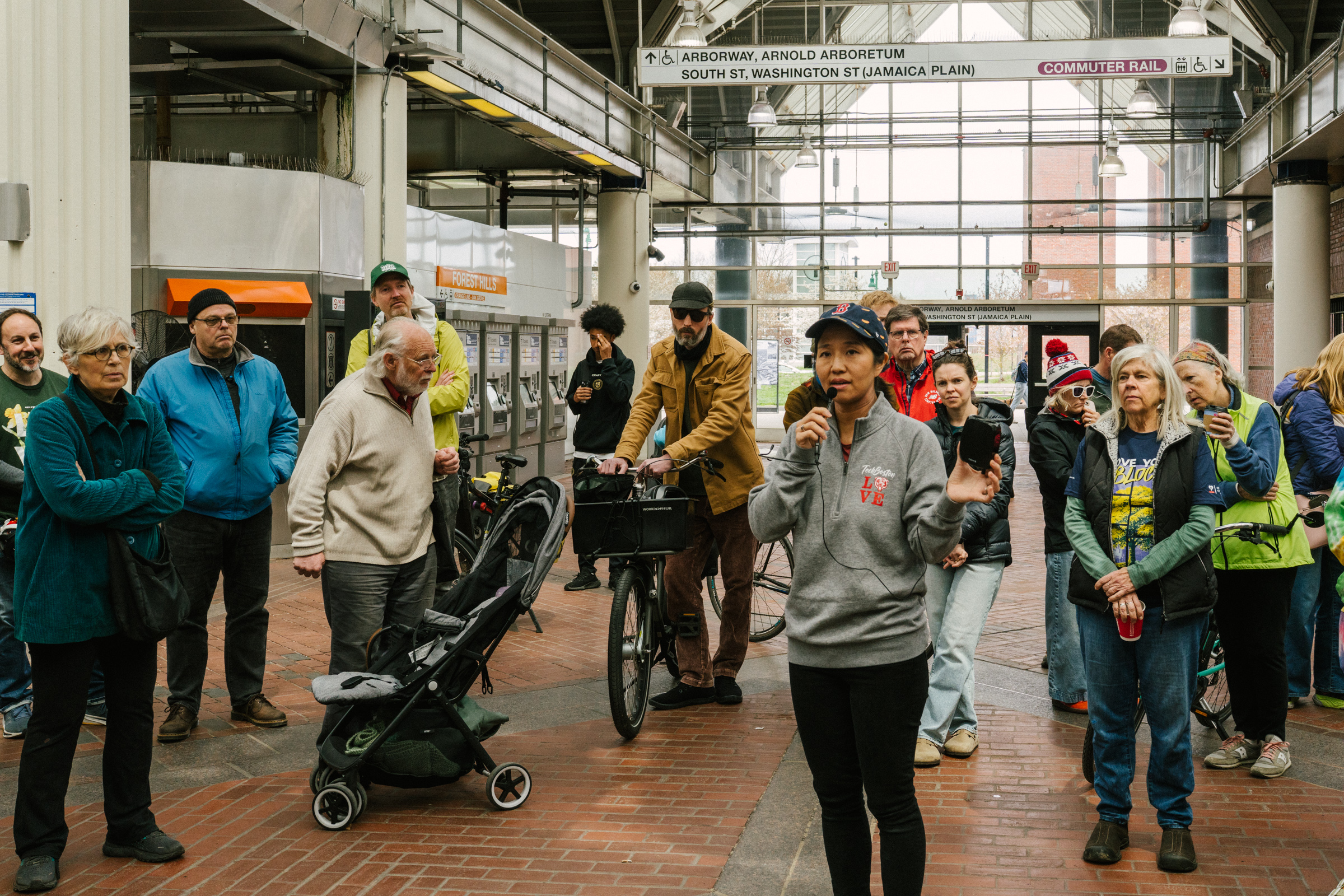
Residents pressed the administration for a safer Hyde Park Avenue that prioritizes pedestrians, bus commuters, accessibility, and children, and people on bikes and wheels. They spoke, again, of near-misses, of not being able to take their kids to school safely, of witnessing car drivers going 50mph routinely, blowing past red lights and pedestrian crossings. The city's response was, broadly, that they are pretty much unwilling to reduce car traffic volume or speed on HPA.
We wrote an email in response to the meeting (please see the letter below) and have not received an answer. So, we designed a video game to let everyone experience what it feels like crossing Hyde Park Avenue. Enjoy!
Two Asks
1) Email Mayor Wu, Nick Gove, and your city councillors to reiterate the need for meaningful safety improvements on HPA like the ones that were outlined in a design completed in 2020. You can elaborate on any of the points of our letter, or add your own perspective.
2) Help us continue to reach out to local businesses to keep them involved in a shared vision of making HPA a vibrant corridor through business hubs. Please let us know if you can do that, and we can send you the letter we have been sharing with them.
Thank you for your continuous engagement for safe streets.
Letter Written After the April 25 Meeting
Dear Mayor Wu:
Thank you again for attending the Hyde Park Ave safety walk this past weekend. As frustrated as we are about the lawless, life-threatening chaos of this corridor and the City's inaction, we do genuinely appreciate you showing up and engaging with our community members.
In your remarks, you asked us to have faith that city government—and specifically, your administration—can get things done. You also asked us to trust that a change in your team's personnel does not mean a change to your philosophy or agenda for safe streets.
So, after the walk, we asked ourselves, "What could Mayor Wu's team do to regain our trust?" And, in turn, "What could we do to demonstrate a commitment to constructive engagement?"
Here's what we ask of you, Nick Gove, and Mohammed Missouri:
The City's 30% designs from 2020 must be the starting point for further discussions of Hyde Park Avenue. The City began outreach on this corridor in 2019. Since then, planners, traffic consultants, and community members have all had their say (more than once). Just this week, you published a Climate Action Plan, that cites an increase in trips taken in single occupancy vehicles and a City-wide objective to reduce city congestion by supporting public transit, biking, walking infrastructure. This action plan explicitly mentions Hyde Park Avenue as a priority corridor for bus lanes. We flatly refuse to engage in blank slate discussions, nor will we sit through another workshop in which we're asked to put sticky notes on a map of the corridor, as we have done on more than five occasions and in countless individual and group meetings with BTD staff. "Faster, more reliable bus service" was the City's primary goal for this corridor—in 2019 and 2024—and nothing about that should change.
Safety improvements this year (2026). You committed to safety improvements in the fall, as part of the planned repaving. Show us engineering drawings of safety improvements consistent with the vision of the existing, 30% designs; if you fail to come up with any, please do not do the repaving, either. We refuse to have our lives cast as the necessary casualties of a high-throughput, high-speed corridor for the convenience of far-away, private vehicle commuters.
Actual, credible enforcement of reckless traffic endangerment. Red light cameras, speed traps, and criminal charges—these are credible. VMS signs, verbal warnings, and commitments of future BPD staffing—are not.
"Could this (public) meeting have been an email?" We are fundamentally, philosophically opposed to further public meetings. Not only are they racist and exclusionary to begin with, they're also a waste of time and city resources. If there are, as you put it, "details to get right" in those 30% design plans and communities to be consulted—bus riders? school-age children? small businesses?—by all means consult them. We expect you to publish engineering drawings and committed timelines before you ask for more of our time.
Hold yourselves accountable. In your remarks, you mentioned a lack of engagement from the MBTA; gestured at converting the MBTA's parking facility into housing; creating a bike path along the railroad on land which the city does not own; and proposed reconsidering the existence of Ukraine Way (which is the purview of DCR). These are unrelated ideas that are definitively not prerequisites for the 30% designs published in 2020. Please stick to what the City controls and has already made progress on.
In return for your commitments, here are some of ours:
We will center bus riders as the transportation users of this corridor most affected by chronic congestion. Our primary transportation objective for this corridor is faster, more reliable, and more accessible bus service. Knowing that the MBTA will soon be able to enforce bus lane violations automatically gives us hope that all other roadway users—pedestrians, cyclists, children on school buses, ambulances—will reap the safety benefits of buses being given the priority that residents who rely on public transit deserve.
We are ready to support you in "getting the details right"—and supporting targeted outreach. We know that more Bostonians support your safe streets agenda than oppose it—and that this is true in all neighborhoods, amongst all racial and ethnic groups, and at all income and education levels. We also know that the only group for which this is not true is residents aged 55+. We stand ready to help the City with outreach to specific groups. We have, for example, already visited 40+ businesses along Hyde Park Avenue to collect letters of support. Tell us how we can help you; and, in turn, we commit to helping the City when it comes time to defend trade-offs (e.g., the loss of a few parking spaces, a few minutes added to rush hour car commutes) that may invite some amount of vocal opposition.
We will continue to fight to make Boston the best city for raising a family. We believe in your vision, and we want your administration to live up to its promise. Boston should be welcoming, accessible, affordable, and functional for all of its residents—and those who would seek to build their life here. We will continue to advocate for policies and infrastructure that support these objectives.
We hope to hear from you with concrete next steps soon.
Yours, Ben Siegel, the other organizers of the Hyde Park Avenue Safety Walk, and the more than 700 residents of streets surrounding Hyde Park Avenue who have been asking for action for more than five years